Sun
Star at the center of the Solar System
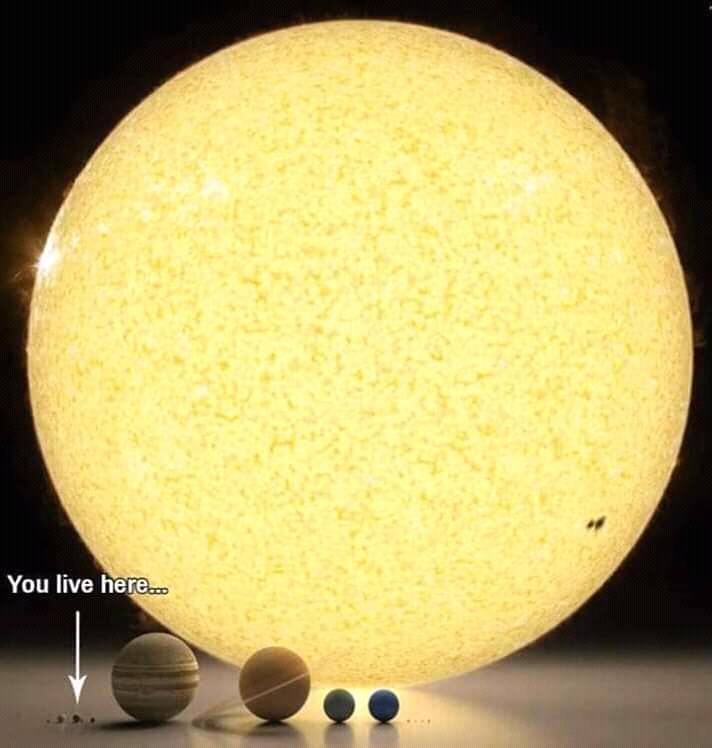
The Sun is the star at the center of theSolar System. It is a nearly perfectsphere of hot plasma, with internalconvective motion that generates amagnetic field via a dynamo process.It is by far the most important source ofenergy for life on Earth. Its diameter is about 1.39 million kilometers (864,000 miles), or 109 times that of Earth, and its mass is about 330,000 times that of Earth. It accounts for about 99.86% of the total mass of the Solar System.Roughly three quarters of the Sun’s mass consists of hydrogen (~73%); the rest is mostly helium (~25%), with much smaller quantities of heavier elements, including oxygen, carbon, neon, and iron.Quick facts: Escape velocity (from the surface), Names …
The Sun is a G-type main-sequence star(G2V) based on its spectral class. As such, it is informally and not completely accurately referred to as a yellow dwarf(its light is closer to white than yellow). It formed approximately 4.6 billionyears ago from the gravitational collapseof matter within a region of a largemolecular cloud. Most of this matter gathered in the center, whereas the rest flattened into an orbiting disk thatbecame the Solar System. The central mass became so hot and dense that it eventually initiated nuclear fusion in itscore. It is thought that almost all starsform by this process.
The Sun currently fuses about 600 million tons of hydrogen into heliumevery second, converting 4 million tons of matter into energy every second as a result. This energy, which can take between 10,000 and 170,000 years to escape from its core, is the source of the Sun’s light and heat. When hydrogen fusion in its core has diminished to the point at which the Sun is no longer inhydrostatic equilibrium, its core will undergo a marked increase in density and temperature while its outer layers expand, eventually transforming the Sun into a red giant. It is calculated that the Sun will become sufficiently large to engulf the current orbits of Mercury andVenus, and render Earth uninhabitable – but not for about five billion years. After this, it will shed its outer layers and become a dense type of cooling star known as a white dwarf, and no longer produce energy by fusion, but still glow and give off heat from its previous fusion.
The enormous effect of the Sun on Earth has been recognized since prehistoric times, and the Sun has been regarded by some cultures as a deity. The synodicrotation of Earth and its orbit around the Sun are the basis of solar calendars, one of which is the predominant calendar in use today.
 SUPER SCIENCE FORUM